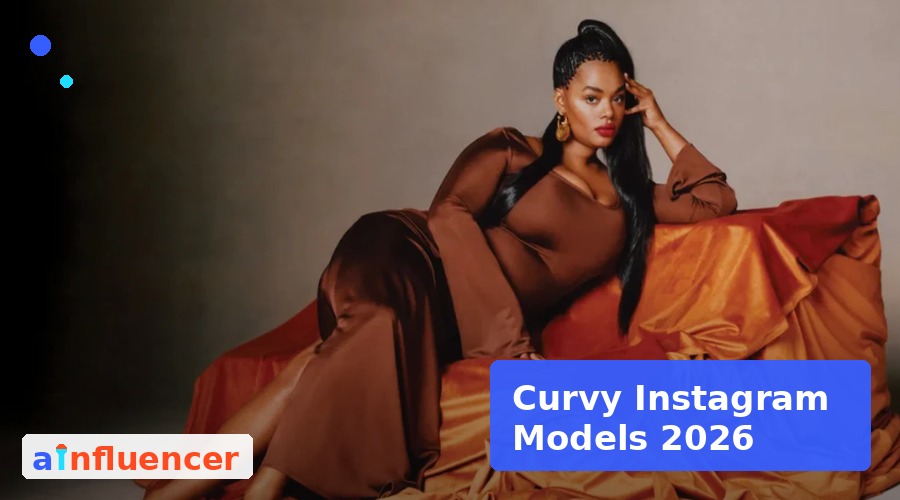
Instagram did what the fashion industry spent decades refusing to do: it let curvy women build their own audiences, and those audiences are now too big to ignore. The 25 curvy Instagram models below run from a size-inclusive supermodel with more followers than most Hollywood actresses to the runway names who put curves on Chanel and Versace catwalks.
Every profile was checked by hand against a real, public account and ranked by live follower count, so there are no fan pages or filler here. If you are new to how this world works, our guide to the top Instagram models explains what separates a working model from a viral account.
What ties these women together is not a dress size. Some are agency-signed curve models booked for Vogue and Sports Illustrated; others built followings in the tens of millions with a phone and a good eye. Both matter to brands, because their followers see how clothes actually fit before they buy. Keep reading for what these models charge and how to find the right one for your budget.
Best Curvy Instagram Models to Follow in 2026
Ranked by Instagram following, these are the 25 hottest curvy Instagram models right now, each with a verified public profile and a distinct lane. The list runs from supermodels who broke every plus-size barrier in fashion to Instagram-native curvy models with audiences in the tens of millions.
1. Ashley Graham
@ashleygrahamAshley Graham changed what a cover model looks like when she became the first plus-size model on the cover of the Sports Illustrated Swimsuit Issue in 2016, and she has since landed Vogue covers, a Revlon ambassadorship, and a television hosting career. She is the most-followed curvy model on Instagram by a wide margin.
Her feed mixes campaigns, motherhood, and unfiltered body-confidence content, and her audience trusts her recommendations more than most celebrities’. For brands, she is the benchmark for the whole curve category.
2. Demi Rose
@demiroseBirmingham-born Demi Rose is one of the original Instagram-native models, building a following in the tens of millions on curves, travel, and fashion content long before most brands understood the platform. She has fronted campaigns for PrettyLittleThing and is now based in Ibiza.
Her feed is famously curated to a small number of posts, each one produced like a campaign image. Fashion and swim brands book her for reach that rivals many mainstream celebrities.
3. Jailyne Ojeda
@jailyneojedaJailyne Ojeda grew from an Arizona teenager posting on Instagram into one of the most-followed Mexican-American models on the platform, with music video appearances and fashion campaigns along the way. Her curves and fitness routine are the core of her feed.
Her audience is young, bilingual, and heavily concentrated in the United States and Mexico, which makes her valuable for brands targeting Hispanic consumers. She is a top pick for fitness, fashion, and beauty campaigns.
4. Anastasiya Kvitko
@anastasiya_kvitkoKaliningrad-born Anastasiya Kvitko moved to the United States to model and became one of the most-followed curvy models on Instagram, earning the nickname the Russian Kim Kardashian from the press. Fashion Nova and swimwear brands built campaigns around her figure.
Her feed is glamour-driven, with swim, fashion, and travel content shot to a high production standard. She reaches a global audience that spans the United States, Russia, and Latin America.
5. Abigail Ratchford
@abigailratchfordScranton, Pennsylvania native Abigail Ratchford was one of the first models to build a career almost entirely on Instagram, and the press dubbed her the Queen of Curves as her following climbed into the millions. Maxim features and swim and lingerie campaigns followed.
Her feed is glamour-first and tightly edited, with a small number of posts that each pull huge engagement. Swim, fashion, and beauty brands looking for maximum reach in the curvy category book her for exactly that.
6. Sofia Jamora
@sofiajamoraLos Angeles native Sofia Jamora became the face of Frankies Bikinis and one of the most recognizable curvy swim models on Instagram, with a starring turn in Zayn’s Let Me video adding mainstream fame. Her feed is sun-soaked, minimal, and heavily curated.
She works mostly with swim, fashion, and beauty brands that want a California aesthetic with real curves. Her audience is loyal and strongly female, which makes her content convert.
7. La’Tecia Thomas
@lateciatLa’Tecia Thomas went from Melbourne to Los Angeles and became one of the most-followed plus-size models in the world, with fashion and swimwear campaigns and a feed built on unapologetic confidence. She is a fixture of the curve-model scene on both sides of the Pacific.
Her content leans glamorous and bold, and her audience responds hard to fashion and beauty drops. She is a strong choice for size-inclusive brands that want a face with real reach.
8. Tabria Majors
@tabriamajorsNashville-born Tabria Majors went viral in 2018 when she recreated a Victoria’s Secret campaign with plus-size models, then landed in the Sports Illustrated Swimsuit Issue in 2021. She has become one of the most vocal advocates for size inclusion in lingerie and swim.
Her Instagram mixes swim, lingerie, and behind-the-scenes content with sharp commentary on the industry. Brands that want credibility with curvy audiences turn to her first.
9. Nadia Aboulhosn
@nadiaaboulhosnNadia Aboulhosn built her audience as one of the first curve fashion bloggers, then designed her own collections with boohoo and Addition Elle and modeled for major fashion brands. Her Lebanese-American background and streetwear sensibility set her apart in the curve space.
Her feed is fashion-forward and edgy rather than soft, which attracts a style-conscious audience. She fits fashion, denim, and streetwear brands best.
10. Hunter McGrady
@huntermcgradyHunter McGrady has appeared in the Sports Illustrated Swimsuit Issue year after year and was once described as the curviest model ever to appear in it. She launched her own size-inclusive clothing line, All Worthy, on QVC.
Her Instagram is warm, funny, and honest about motherhood and body image, and her audience engages like a community. She is an easy fit for apparel, swim, and family-lifestyle brands.
11. Denise Bidot
@denisebidotDenise Bidot made history in 2014 as the first plus-size model to walk two straight-size shows in one New York Fashion Week season, and she has fronted campaigns for Swimsuits For All, Lane Bryant, and Nordstrom. She started the There Is No Wrong Way to Be a Woman movement.
Her feed mixes swim, fashion, and motherhood with a warm, empowering tone, and her Puerto Rican and Kuwaiti heritage gives her reach in both Latin and Middle Eastern audiences.
12. Paloma Elsesser
@palomijaDiscovered by makeup artist Pat McGrath, Paloma Elsesser became the first curve model named Model of the Year at the British Fashion Awards in 2021 and has landed Vogue covers and campaigns for Fenty Beauty, Nike, and Coach. She is the curve model high fashion takes most seriously.
Her Instagram is arty, personal, and less polished than a typical campaign feed, which is exactly why fashion insiders follow her. She suits luxury and beauty brands that want cultural credibility.
13. Saffi Karina
@saffi_karinaSaffi Karina is a British curve model whose feed mixes fashion, fitness, and frank body-confidence content, with campaign work for UK fashion and swim brands. Her audience has grown fast on the strength of her unfiltered approach.
She is a good fit for size-inclusive fashion, activewear, and swim brands that want a British voice with proven engagement.
14. Tara Lynn
@taralynnTacoma-born Tara Lynn was one of the first plus-size models to break into high fashion, landing the cover of Vogue Paris in 2010 and Elle France soon after, followed by H&M campaigns seen around the world. She helped open the door every curve model on this list walked through.
Her Instagram is sparse and considered, with a focus on editorial work and life outside fashion. She remains a respected name for luxury and heritage brands.
15. Ella Halikas
@ellahalikasElla Halikas built her audience on TikTok and Instagram with body-confidence content that turned into swim campaigns and a modeling career. The Greek-American model represents the newest generation of curve talent, discovered by the audience before the industry.
Her feed is energetic and video-first, which makes her a strong pick for brands that want Reels and short-form content rather than static campaign shots.
16. Precious Lee
@preciousleexoxoAtlanta-born Precious Lee became the first Black plus-size model in the Sports Illustrated Swimsuit Issue in 2016, then broke into high fashion with a Versace runway debut and Vogue covers. Her career has redrawn the limits of the curve category.
Her Instagram is glamorous and editorial, heavy on runway and campaign moments. She is a first call for luxury fashion and beauty brands looking for a curve model with real fashion credentials.
17. Robyn Lawley
@robynlawleyAustralian model Robyn Lawley was the first plus-size model to appear in the Sports Illustrated Swimsuit Issue in 2015 and the first to front a Ralph Lauren campaign, and she has covered Vogue Italia. She also designs her own swimwear line.
Her feed mixes swim, motherhood, food, and advocacy, with a thoughtful, no-nonsense voice. Swim and lifestyle brands value her authenticity.
18. Felicity Hayward
@felicityhaywardFelicity Hayward is a British curve model and activist who founded the Self Love Brings Beauty campaign and has fronted lingerie, fashion, and beauty work across the UK industry. She is one of the most outspoken voices on size inclusion in British fashion.
Her Instagram is colorful and campaign-driven, with a strong UK following. Brands that want a curve model with a genuine activist platform book her.
19. Kate Wasley
@katewas_Australian model Kate Wasley co-founded the Any BODY project with straight-size model Georgia Gibbs to push back on body comparison, and the two went on to appear together in the 2018 Sports Illustrated Swimsuit Issue. She has become a leading curve voice in Australia.
Her feed mixes swim, fashion, and candid conversation about body image. Swim, fashion, and wellness brands targeting Australia are her best fit.
20. Jill Kortleve
@jilla.tequilaDutch model Jill Kortleve became the first curve model to walk the Chanel runway in more than a decade in 2020 and has since walked for Alexander McQueen, Jacquemus, and Versace while covering Vogue editions worldwide. She is high fashion’s proof that curve models belong on the biggest runways.
Her Instagram is editorial and understated, heavy on backstage and campaign moments. Luxury fashion and beauty brands looking for runway credibility book her.
21. Jada Sezer
@jadasezerLondon-based Jada Sezer made headlines when she ran the 2018 London Marathon in her underwear to challenge ideas about what athletic bodies look like, on top of a modeling career built with British fashion and lingerie brands. She is a leading voice for body positivity in the UK.
Her feed mixes fitness, fashion, and mental health content with a warm, direct tone. Activewear and wellness brands find her audience especially engaged.
22. Candice Huffine
@candicehuffineCandice Huffine was the first plus-size model in the Pirelli Calendar in 2015 and covered Vogue Italia alongside Tara Lynn and Robyn Lawley in 2011, then founded the size-inclusive activewear brand Day/Won. She is also a marathon runner.
Her Instagram blends fashion, running, and activewear content with a grounded voice. She is a strong fit for fitness and apparel brands that take size inclusion seriously.
23. Sonny Turner
@sonnyturner___Sonny Turner is a British curve model who has fronted campaigns for major fashion and beauty brands and speaks openly about body image and mental health in the industry. Her look and voice have made her one of the most in-demand curve models in the UK.
Her feed is fashion-heavy and honest, with a young, style-driven audience. Beauty, fashion, and lingerie brands looking for a British curve face turn to her.
24. Bree Kish
@breekishBree Kish is an American curve model whose swim and fashion campaigns pair with candid, funny content about body image that her audience shares widely. She represents the approachable end of the curve-model spectrum.
Her feed is relatable and consistent, which makes her a good fit for swim, apparel, and everyday-beauty brands that want authenticity over gloss.
25. Olivia Campbell
@curvycampbellOlivia Campbell is a British curve model who has fronted campaigns for sportswear and fashion brands and built a loyal UK audience with confident, fashion-forward content. Her handle says exactly what she stands for.
Her Instagram mixes campaign work, streetwear, and body-positive messaging. Activewear and high-street fashion brands in the UK are her natural partners.
Top Curvy Instagram Models at a Glance
Here is the full ranking of the best curvy Instagram models side by side, sorted by follower count, with each model’s handle, reach, and signature credit. Every profile was confirmed individually, and counts reflect September 2026 figures shown the way Instagram displays them.
| # | Model | Followers | Known For | |
|---|---|---|---|---|
| 1 | Ashley Graham | @ashleygraham | 20.6M | First plus-size SI Swimsuit cover model, Vogue covers, Revlon ambassador |
| 2 | Demi Rose | @demirose | 17.7M | British Instagram model, PrettyLittleThing campaigns, based in Ibiza |
| 3 | Jailyne Ojeda | @jailyneojeda | 14.1M | Mexican-American Instagram model, music video appearances, fitness content |
| 4 | Anastasiya Kvitko | @anastasiya_kvitko | 12.4M | Russian-born, US-based curvy model nicknamed the Russian Kim Kardashian |
| 5 | Abigail Ratchford | @abigailratchford | 8.5M | Instagram-native model dubbed the Queen of Curves, Maxim features |
| 6 | Sofia Jamora | @sofiajamora | 2.3M | Frankies Bikinis face, appeared in Zayn’s Let Me video |
| 7 | La’Tecia Thomas | @lateciat | 1.6M | Australian-born, LA-based curve model with fashion and swim campaigns |
| 8 | Tabria Majors | @tabriamajors | 1.5M | Viral plus-size Victoria’s Secret recreation, SI Swimsuit 2021 |
| 9 | Nadia Aboulhosn | @nadiaaboulhosn | 769K | Lebanese-American model and designer, boohoo and Addition Elle collaborations |
| 10 | Hunter McGrady | @huntermcgrady | 732K | Sports Illustrated Swimsuit veteran, All Worthy clothing line on QVC |
| 11 | Denise Bidot | @denisebidot | 707K | First plus-size model to walk two straight-size NYFW shows in one season |
| 12 | Paloma Elsesser | @palomija | 651K | Model of the Year at the 2021 British Fashion Awards, Vogue covers |
| 13 | Saffi Karina | @saffi_karina | 575K | British curve model with fashion and swim campaigns and body-confidence content |
| 14 | Tara Lynn | @taralynn | 496K | Vogue Paris and Elle France covers, H&M campaigns |
| 15 | Ella Halikas | @ellahalikas | 456K | Greek-American curve model who broke out on TikTok with body-confidence content |
| 16 | Precious Lee | @preciousleexoxo | 454K | First Black plus-size model in SI Swimsuit, Versace runway, Vogue covers |
| 17 | Robyn Lawley | @robynlawley | 292K | First plus-size model in SI Swimsuit, Ralph Lauren campaigns, swimwear designer |
| 18 | Felicity Hayward | @felicityhayward | 288K | British curve model, founder of the Self Love Brings Beauty campaign |
| 19 | Kate Wasley | @katewas_ | 284K | Co-founder of the Any BODY project, Sports Illustrated Swimsuit 2018 |
| 20 | Jill Kortleve | @jilla.tequila | 281K | First curve model on the Chanel runway in over a decade, McQueen and Versace |
| 21 | Jada Sezer | @jadasezer | 281K | British curve model who ran the London Marathon in underwear for body positivity |
| 22 | Candice Huffine | @candicehuffine | 251K | First plus-size model in the Pirelli Calendar, Day/Won activewear founder |
| 23 | Sonny Turner | @sonnyturner___ | 221K | British curve model with major fashion and beauty campaigns |
| 24 | Bree Kish | @breekish | 187K | American curve model known for swim and fashion campaigns and candid content |
| 25 | Olivia Campbell | @curvycampbell | 179K | British curve model with sportswear and fashion campaigns |
How Brands Work With Curvy Instagram Models
Curvy models earn their fees differently from most influencers. Apparel brands that show products on a range of real bodies see fewer returns and higher conversion, because shoppers can finally judge fit before they buy. A curvy model’s try-on content is as much a sales tool as an awareness play.
That changes how you brief. Ask for fit details, the size worn, and movement on camera, not just a static campaign shot. Our breakdown of influencer rates walks through what drives pricing tier by tier.
Ashley Graham and the other names above 10 million followers are booked through agencies for six-figure campaign fees. Models in the 1 to 5 million range typically land between several thousand and tens of thousands of dollars per post, and the established curve models between 200K and 800K followers are often the best value on this list.
Range readiness matters before casting. If your product stops at a size 12, booking a size 18 model creates a backlash rather than a sale, so extend the range first or brief the model on exactly what she can honestly show.
Usage rights are the other big variable: fit content gets reused on product pages and in paid ads, and models price that reuse separately. The principles match any fashion influencer marketing campaign, with one addition. Give the model creative control over how her body is shown, because her audience can tell the difference between confidence and a brand’s idea of it.
How to Find Curvy Instagram Models for Your Campaign
If your budget does not stretch to supermodel rates, look one or two tiers down. Thousands of curvy models with 10K to 300K followers produce campaign-quality fit and try-on content at a fraction of the cost, and their engagement rates are usually several times higher than the mega accounts on this list, because their followers shop the same sizes they wear.
Our guide on how to find influencers covers the search process step by step, from hashtag mining and lookalike research to vetting an account for fake followers before you reach out.
The fastest path is a marketplace. On Ainfluencer, brands can filter creators by niche, location, follower range, and engagement, invite the models that fit, negotiate in chat, and keep payment in escrow until the content is approved. It is free for brands to start, which makes it a low-risk way to test a few curvy creators on fit content before committing to a bigger name.
Conclusion
From Ashley Graham at number one to Olivia Campbell at number 25, these are the top curvy Instagram models of 2026, ranked by live follower counts and confirmed one profile at a time. The list covers the pioneers who put plus-size models on Vogue and Sports Illustrated covers, the runway names who walked Chanel and Versace, and the Instagram-native models whose audiences dwarf many celebrities’.
Curves are only one way to browse the platform’s talent. If you are discovering models by look, our roundups of blonde Instagram models and Asian Instagram models cover two more corners of Instagram. Pick the profiles that match your taste or your brand, hit follow, and watch how the best in the business run a feed.
Frequently Asked Questions
Who is the most-followed curvy model on Instagram?
Ashley Graham leads with 20.6 million followers, built on her 2016 Sports Illustrated Swimsuit cover, Vogue covers, and a decade as the face of size inclusion in fashion. Demi Rose (17.7M), Jailyne Ojeda (14.1M), and Anastasiya Kvitko (12.4M) follow, all of them Instagram-native models who built their audiences on the platform itself.
How were these curvy Instagram models ranked?
Purely by live Instagram follower count, checked in September 2026 and shown the way Instagram displays it. Every account was verified as the model’s real profile, and only public, embeddable profiles were included, which is why a few well-known names are absent. Fan pages, agency accounts, and inactive profiles were left out.
What is the difference between curvy, curve, and plus-size models?
In the industry, curve or plus-size usually means models who work above a US size 10 or 12 and are represented by dedicated curve divisions at agencies like IMG, Wilhelmina, and Milk. On Instagram, curvy is broader and also covers hourglass figures at smaller sizes. This list includes both, from high-fashion curve models like Paloma Elsesser to Instagram-native curvy models like Demi Rose.
How much do curvy Instagram models charge for a sponsored post?
It depends on reach, engagement, and usage rights. Names above 10 million followers are booked through agencies for six-figure campaign fees. Models in the 1 to 5 million range typically command several thousand to tens of thousands of dollars per post, while established curve models with 200K to 800K followers often land between one and ten thousand dollars, sometimes less for gifted or affiliate deals.
Which of these models made history in fashion?
Several. Tara Lynn covered Vogue Paris in 2010, Candice Huffine was the first plus-size model in the Pirelli Calendar, Robyn Lawley and Ashley Graham broke the Sports Illustrated barrier, and Precious Lee was its first Black plus-size model. Denise Bidot walked two straight-size New York Fashion Week shows in one season, Jill Kortleve brought curves back to Chanel, and Paloma Elsesser won Model of the Year at the British Fashion Awards.
How can a brand find curvy Instagram models on a smaller budget?
Look below the celebrity tier. Curvy models with 10K to 300K followers create campaign-quality fit and try-on content at a fraction of the cost, often with much higher engagement, and their followers are the exact shoppers who buy size-inclusive products. A free marketplace like Ainfluencer lets you filter creators by niche, location, follower range, and engagement, then hold payment in escrow until the content is approved.