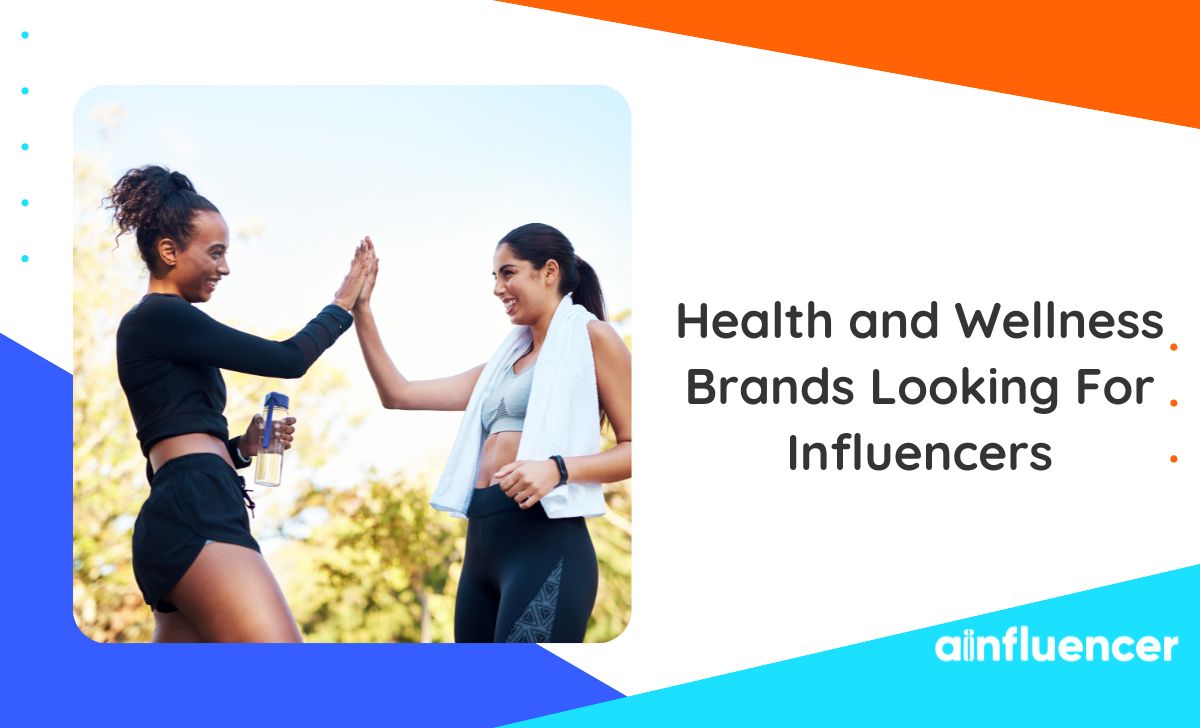
20 Health and Wellness Brands Looking for Influencers
Supplements, mental health apps, and functional food brands actively booking creators, with real rates and the compliance rules that decide who gets rebooked.
Health and wellness brands looking for influencers now spend more on creators than on any other channel, because wellness is the category where trust converts most directly into purchase: nobody swallows a supplement or downloads a therapy app on the strength of an ad. That is why the sector leans so heavily on creators and on healthcare influencer marketing partnerships built around genuine long-term use rather than one-off posts.
Below are 20 brands actively working with creators in 2026, grouped by supplements, mental health, apparel, and emerging labels, plus what each typically offers, the compliance rules specific to this category, and the pitch structure that lands.
Why Health and Wellness Brands Are Looking for Influencers
Three factors make this category unusually creator-dependent. Wellness products require sustained use before results appear, so a creator documenting eight weeks of a routine is worth far more than a beautiful single image. Purchase decisions are trust-led, since buyers are putting something in their body or handing over private information. And repeat purchase is the norm, so one converted customer is worth several transactions, which lets brands pay more per acquisition than most consumer categories.
The scale is significant too. Wellness consistently ranks among the highest-spending creator verticals in sector research, including the annual data compiled in industry benchmark reports, and budgets keep growing as the category fragments into more niches.
What Health and Wellness Brands Looking for Influencers Pay
| Creator Tier | Followers | Typical Deal | Usual Deliverables |
|---|---|---|---|
| Nano | 1K to 10K | Product plus $75 to $300 | Tagged posts, discount code |
| Micro | 10K to 100K | $300 to $2,000 plus product | Routine video, Stories, usage rights |
| Macro | 100K to 1M | $2,000 to $10,000 | Multi-week campaign, exclusivity |
| Mega | 1M+ | $10,000+ | Ambassadorship, product collaboration |
Two structural features raise real earnings above those numbers. Subscription products pay recurring or high-bounty commissions, since a converted customer often stays for months. And ambassadorships are the category norm rather than the exception, because brands need the multi-week arc that proves a product works, which turns one good campaign into predictable monthly income.
Supplement and Nutrition Brands Looking for Influencers
1. Athletic Greens (AG1)
One of the most aggressive creator advertisers in the category, running long-term ambassador deals and podcast-style integrations across audience sizes.
2. Ritual
Subscription vitamins with a transparency-led brand story, favoring creators who explain ingredients accurately rather than promising outcomes.
3. Vital Proteins
Collagen and wellness powders with broad creator programs spanning fitness, beauty, and lifestyle audiences.
4. Bloom Nutrition
Built almost entirely on creator marketing, particularly short-form video, and remains highly accessible to micro creators.
5. Goli Nutrition
Gummy supplements with a large affiliate and creator program, converting well with mainstream audiences.
6. Nutrafol
Hair-wellness supplements running structured creator campaigns, strong fit for beauty and wellness crossover creators.
7. Splendid Spoon
Plant-based meal delivery with per-subscription bounties, which makes it lucrative for creators with food-adjacent audiences.
8. Femarelle
Women’s health supplements targeting a specific life stage, a narrow niche with low creator competition and loyal audiences.
Mental Health, Sleep, and Recovery Brands
9. BetterHelp
One of the largest creator advertisers in existence, paying per-signup bounties and working across almost every content vertical.
10. Calm
Meditation and sleep app running creator campaigns plus an affiliate program, effective with audiences that skew toward stress and burnout content.
11. Pillow Cube
Sleep products with a distinctive hook, working with creators who can demonstrate the problem the product solves.
12. Recover (red light therapy)
Recovery devices with high order values, converting well with fitness, biohacking, and longevity audiences.
13. Adoratherapy
Aromatherapy and mood products, receptive to nano and micro creators in the self-care space.
Wellness Apparel and Equipment Brands
14. Gymshark
The category’s benchmark creator program, competitive but genuinely open to smaller creators with real community engagement.
15. Lululemon
Selective Creator Network paying 5 to 20% commission plus quarterly gifting; our full guide to the lululemon influencer program covers requirements and application steps.
16. Fabletics
Subscription activewear paying strong per-signup commissions, one of the highest-converting programs for lifestyle creators.
17. DEVALA
Sustainable yoga and wellness apparel, working with creators in the mindful movement space.
Emerging Wellness Brands Worth Pitching
18. Capuli Club
Functional beverage brand actively recruiting micro creators for gifting plus commission arrangements.
19. Fit Life Creation
Wellness products and programs, accessible to smaller creators building a first paid partnership.
20. Harmonie Home and Body
Natural body-care brand that gifts widely and converts well with home and self-care crossover audiences.
Emerging brands are the realistic entry point. They cannot outbid established players for large creators, so they recruit smaller accounts aggressively and often negotiate better commission terms than household names do.
Compliance Rules for Health and Wellness Brands
This is the one category where a sloppy caption can end a partnership permanently, because health claims are regulated in most markets. Non-negotiables:
- Never promise treatment outcomes. Supplements do not cure, treat, or prevent disease, and saying they do creates legal exposure for the brand
- Describe your experience, not universal results. “This is what happened for me” is defensible; “this will fix your gut” is not
- Disclose every partnership clearly, including gifted product and affiliate codes, per the FTC disclosure guidelines
- Add a professional-advice caveat where relevant, especially for supplements, mental health, and anything affecting medication
- Avoid before-and-after framing that implies medical results, which most brands’ legal teams now reject outright
Creators who handle compliance well become the ones brands rebook, because the marketing team does not have to fight legal review over their copy. It is a genuine competitive advantage rather than a constraint.
How to Pitch Health and Wellness Brands Looking for Influencers
Four blocks, sent to a named contact 6 to 8 weeks before a campaign window
- Show genuine use. Wellness brands can tell instantly whether you actually take the product, and authenticity is the whole asset
- Describe your audience by goal. “Women 30 to 45 working on sleep and stress” is bookable; “lifestyle audience” is not
- Propose a series. A four-week routine documented honestly out-converts a single post and justifies a larger fee
- State your compliance approach. Saying you will avoid health claims and disclose properly moves you ahead of most applicants
- Ask for a fee plus a code. Guaranteed income plus commission upside is the standard structure in this category
Everything here maps onto the same underlying evaluation, so audit yourself against our checklist of what brands look for in influencers before you send anything.
Content That Converts for Health and Wellness Brands
- Multi-week routine documentation. The category’s flagship format, because wellness products need time to show anything at all
- Morning and evening routine videos. Convert several products from one piece of content and reflect how people actually buy
- Honest check-ins. Reporting week four when nothing has changed yet builds more trust than a triumphant before-and-after
- Ingredient and mechanism explainers. The highest search value in the category, and the safest content to make compliant
- Problem-first content. Sleep, energy, stress, and digestion are what people search; lead with the problem, not the product
- Cost breakdowns. Wellness is expensive, and content that honestly weighs whether something is worth the money converts unusually well
Seasonality: When Wellness Brands Book Creators
Wellness spending is sharply seasonal. The dominant window runs November through February, when new-year resolution budgets absorb the majority of annual spend, with a secondary peak in April and May before summer. Late summer is the category’s quietest stretch, when inbound offers slow noticeably.
Plan against that curve. Pitch six to eight weeks ahead of each window, lock ambassador terms in autumn so January is booked before it arrives, and use the quiet months to build evergreen explainer content, apply to affiliate programs, and refresh your media kit with current numbers. Creators who treat the slow season as preparation enter every January with a full calendar rather than an empty inbox.
How to Find More Health and Wellness Brands Looking for Influencers
- Use a marketplace. On Ainfluencer’s free marketplace, wellness and supplement brands post live campaigns with budgets attached; apply or get matched, negotiate in-app, and get paid through escrow
- Work the adjacent lists. Wellness overlaps almost completely with fitness and food, so our roundups of fitness brands looking for influencers and food brands looking for influencers widen the pool with no change to your content
- Target the smaller labels first. Emerging wellness brands specifically seek out smaller accounts, which is the practical case for micro influencer marketing in a trust-driven category
- Build commission coverage underneath. Subscription wellness products pay well through affiliate networks, and our comparison of the best affiliate platforms for creators shows where those programs live
Then stack income types so a quiet quarter is not an empty one. Flat fees, commission codes, and gifting together are how creators make money as an influencer in a category whose spending peaks hard in January and softens through summer.
Let wellness brands come to you
Create a free Ainfluencer profile, describe your audience goals, and get matched with wellness campaigns with escrow-protected payments.
Conclusion
Wellness pays creators well because it needs exactly what creators produce: sustained, honest documentation of a product working in a real life. Pick brands you would use without a contract, propose multi-week arcs instead of single posts, handle compliance better than your competition, and take a fee plus commission so both guaranteed and upside income are covered. That combination turns a single campaign into the ambassadorships that make this category one of the most stable places for a creator to earn.
FAQs
How many followers do I need to work with wellness brands?
Gifting and small paid deals commonly start around 1,000 to 5,000 engaged followers. Audience trust and niche clarity matter more than size.
Do wellness brands pay cash or send free product?
Both. Product plus a modest fee is typical at nano level; flat fees plus commission become standard from micro upward.
What can I not say when promoting supplements?
Avoid any claim that a product treats, cures, or prevents a condition. Describe your own experience, add a professional-advice caveat, and disclose the partnership.
Which platform works best for wellness deals?
Instagram for brand relationships and routine content, TikTok for reach, YouTube for long-form documentation that converts subscriptions.
When do wellness brands book the most creators?
November through February for new-year campaigns, with a smaller spring peak. Pitch six to eight weeks ahead of each window, or list on the Ainfluencer marketplace so campaigns find you.