10 Christmas Marketing Campaigns and Why They Worked
The campaigns worth studying, the planning timeline most brands start too late, and how creators fit into a holiday budget.
Christmas marketing campaigns operate under a constraint no other seasonal push shares: every competitor is spending simultaneously, attention is saturated, and the window closes on a fixed date whether you were ready or not. That compression is why holiday work rewards planning far more than budget, and why creator partnerships have become central to it, since a creator marketing platform can deliver dozens of authentic touchpoints in the weeks when paid media costs peak.
This guide covers what makes the season structurally different, ten campaigns worth studying, the patterns behind them, a realistic planning timeline, budget allocation, and the creator playbook that works when everyone else is shouting.
Why Christmas Marketing Campaigns Are Different
Four structural facts shape everything. Media costs rise sharply, because every advertiser bids into the same window, which means the same budget buys materially less reach in December than in September. Attention is saturated, so differentiation matters more than frequency. Purchase intent is unusually high, since people are actively looking for things to buy rather than being persuaded to want something. And the deadline is absolute, which means a campaign that launches late does not simply underperform, it partly misses the season entirely.
Those facts point the same direction. Holiday advantage comes from securing inventory, creators, and creative early at pre-season prices, not from outspending competitors in December when everyone is paying peak rates for the same attention.
10 Christmas Marketing Campaigns Worth Studying
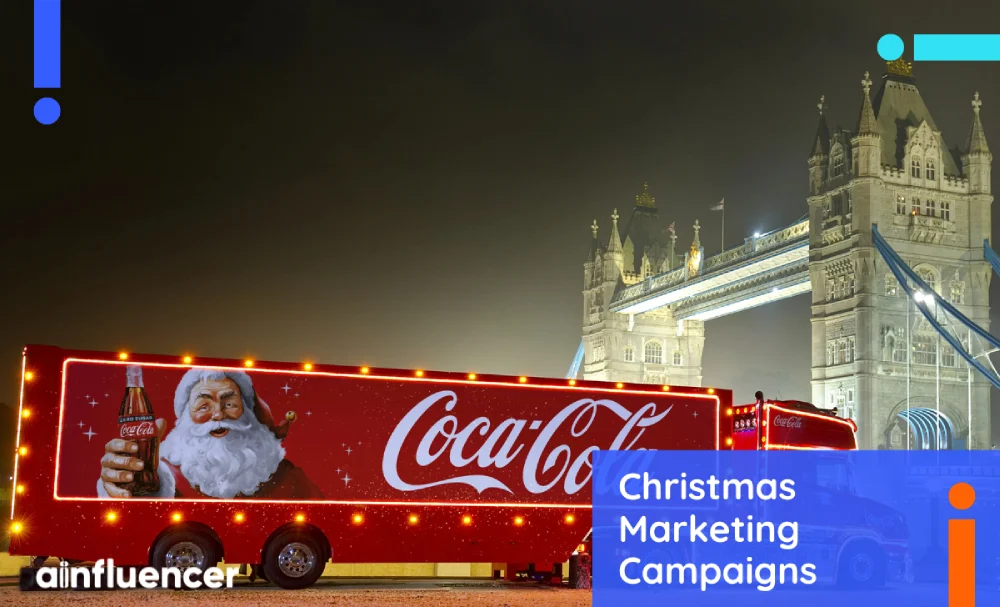
1. Coca-Cola Truck Tour
The clearest example of consistency as strategy. The campaign works because it is the same every year, which turns an advertisement into a seasonal marker people actively look for. Almost no brand is patient enough to build this.
2. John Lewis and Monty the Penguin
Narrative-first advertising with the product almost absent. It works because the emotional payoff earns the brand association rather than demanding it, and because the annual release became a cultural event in its own right.
3. Starbucks Red Cup Day
Turns a packaging change into an annual moment, with customers producing the marketing themselves. The lesson is that a ritual costs less than a campaign and lasts longer.
4. IKEA Christmas Campaigns
Consistently leads with the reality of hosting rather than an idealized version of it, which lands because the audience recognizes their own December in it.
5. McDonald’s Inner Child
Nostalgia used precisely rather than generically, targeting a specific feeling rather than a general warmth.
6. LEGO Holiday Campaigns
Product-as-activity rather than product-as-gift, which extends the message beyond the purchase moment into the days after.
7. Marks & Spencer Seasonal Food Campaigns
Demonstrates that appetite appeal still outperforms narrative in food, and that consistency of format across years compounds recognition.
8. Macy’s Holiday Campaigns
Long-running association between a retailer and the season itself, built through decades of repetition rather than any single execution.
9. Frito-Lay Share More Joy
A sharing message matched to a product genuinely consumed socially, which is a better fit than most holiday brand messages achieve.
10. Google Assistant and Home Alone
Nostalgia plus product demonstration in one execution, showing a feature working inside a story people already knew.
What the Best Christmas Marketing Campaigns Have in Common
- They repeat. Nearly every campaign above is an annual return rather than a one-off, and the recognition compounds each year
- They sell a feeling before a product. The purchase follows the association rather than leading it
- They give the audience something to do. A cup to photograph, a truck to visit, a film to wait for
- They launch early. Most are live in early November, before attention saturates
- They are simple enough to describe in one sentence, which is what allows them to survive being retold
The uncomfortable implication for smaller brands is that most of these depend on budgets and time horizons they do not have. What transfers is the structure rather than the scale: pick one feeling, build one repeatable ritual, launch early, and keep it the same next year.
The Christmas Campaign Planning Timeline
| Month | What Happens | Why Then | Cost of Delay |
|---|---|---|---|
| July to August | Strategy, concept, creator recruitment | Creator rates soft, availability high | Rates rise 20 to 40% later |
| September | Content production, seeding begins | Time to test what converts | No data before launch |
| October | Early creator content, gift guides published | Gift-guide search begins | Missed evergreen search traffic |
| November | Main campaign launch, paid amplification | Attention rising, costs not yet peak | Competing at peak CPM |
| December | Urgency messaging, shipping deadlines | Conversion window | Nothing left to optimize |
The single most valuable line in that table is the first. Recruiting creators in July and August, when the category is quiet, secures better talent at meaningfully lower rates than competing for the same people in October. Brands that start planning in November are buying the leftovers at premium prices.
Relative cost of the same creator and media inventory by booking month
How to Split a Christmas Marketing Budget
- Roughly a third on creator content and partnerships, booked early, producing the assets everything else runs on
- Roughly a third on paid amplification, weighted toward November before costs peak
- Around a fifth on retail and marketplace placement, where purchase intent is highest
- The remainder held in reserve to scale whatever performs, which is consistently the highest-return line
The reserve matters more in December than at any other time of year, because the window is short and the difference between a campaign that worked and one that did not is usually whether budget was available to push the winning asset when it emerged. Our guide to paid media covers how that amplification decision should be made, and the mechanics of running many creative variants at once are covered in our explainer on the dark post format, which is what makes holiday testing practical without cluttering your profile.
The Creator Playbook for Christmas Campaigns
- Recruit in summer. The single highest-leverage decision, and the one almost nobody makes
- Seed product in September and October so creators have genuinely used it before the gifting content lands. Our comparison of influencer gifting platforms covers running that at scale
- Prioritize gift-guide formats, which capture buyers with a defined task rather than passive interest
- Book creators across price points. Holiday shoppers span budgets, and a roster that only reaches one tier misses most of the market
- Blend categories. Gifting cuts across verticals, so rosters drawn from family influencers, food influencers, and fashion creators together outperform a single-category push
- Secure usage rights upfront, since holiday creator content is the best paid-social creative you will have all year
- Disclose properly under the FTC disclosure guidelines, which receive more scrutiny during heavy commercial seasons
Gift-guide content deserves particular emphasis because it compounds. A well-optimized guide published in October keeps ranking and converting in subsequent years with modest refreshes, unlike campaign creative that expires in January. For context on what creator partnerships cost across tiers, annual industry benchmark reports are the most useful public reference.
Mistakes That Waste Holiday Budget
- Starting in November. Every input costs more and the best creators are already booked
- Reinventing the campaign annually. The examples above work through repetition, and starting over each year forfeits the compounding
- Spending everything before testing. Without a reserve you cannot scale what works
- Ignoring shipping deadlines in messaging. Conversion collapses once buyers doubt delivery, and stating the deadline plainly lifts urgency honestly
- Treating January as the end. Post-holiday returns, gift-card redemption, and new-year intent are a second window most brands abandon
- Competing on discount alone. In the one season where everyone discounts, price is the least differentiating message available
What Smaller Brands Should Do Instead
The campaigns above had budgets most businesses will never have, and copying their tactics without their scale produces a weaker version of something that only worked because it was everywhere. The transferable strategy is narrower and cheaper.
Pick one specific gifting occasion you can credibly own rather than the whole season. Build a gift-guide asset that ranks and refresh it annually. Recruit ten to twenty creators in summer at soft rates rather than three in November at peak. Give them genuine creative latitude so the content reads as recommendation rather than advertising, which is exactly what our checklist of what brands look for in influencers describes from the other side. Then hold budget to amplify whichever piece performs.
That approach does not produce a John Lewis moment. It does produce measurable December revenue at a cost per acquisition that survives scrutiny in January, which is the more useful outcome for most businesses.
Book holiday creators before rates rise
Post a free campaign on Ainfluencer, recruit creators in the quiet season, and pay through escrow only on delivery.
Conclusion
The best Christmas marketing campaigns win on repetition, emotional clarity, and early launch rather than on December spend. Plan in summer, seed product in autumn, publish gift-guide content before the search wave arrives, launch the main push in early November, and keep a reserve to scale whatever performs. And whatever you build, build it so you can run it again next year, because compounding recognition is the one advantage in this season that money alone cannot buy.
FAQs About Christmas Marketing Campaigns
When should Christmas campaign planning start?
July or August for strategy and creator recruitment, September for production, October for gift-guide content, and early November for the main launch.
Why do holiday campaigns cost more?
Every advertiser bids into the same window, so media and creator rates rise sharply from October onward. Booking early is the main way to avoid it.
What content converts best during the holidays?
Gift guides and creator recommendations, because buyers arrive with a defined task rather than needing to be persuaded they want something.
Should smaller brands run big narrative campaigns?
Usually not. Owning one specific gifting occasion, publishing a gift-guide asset that ranks, and working with many small creators returns more per dollar.
How do I recruit creators for the holidays?
Start in summer while rates are soft. Post a free campaign on the Ainfluencer marketplace, filter by niche and location, and pay through escrow on delivery.