If you remember loud, eccentric characters introducing products on TV, then the QVC-ification of social media is very familiar. People used to love the product demos, the flash sales, and the chaos of it all.
While traditional TV shopping channels like QVC have declined in popularity, the business model certainly hasn’t. To reimagine this model of product and brand advertising, companies have made use of influencer marketing.
In this article, we’re going to dive into what the QVC-ification of social media is, what it means for brands, and why it works in the first place. Let’s get into it.
TL;DR
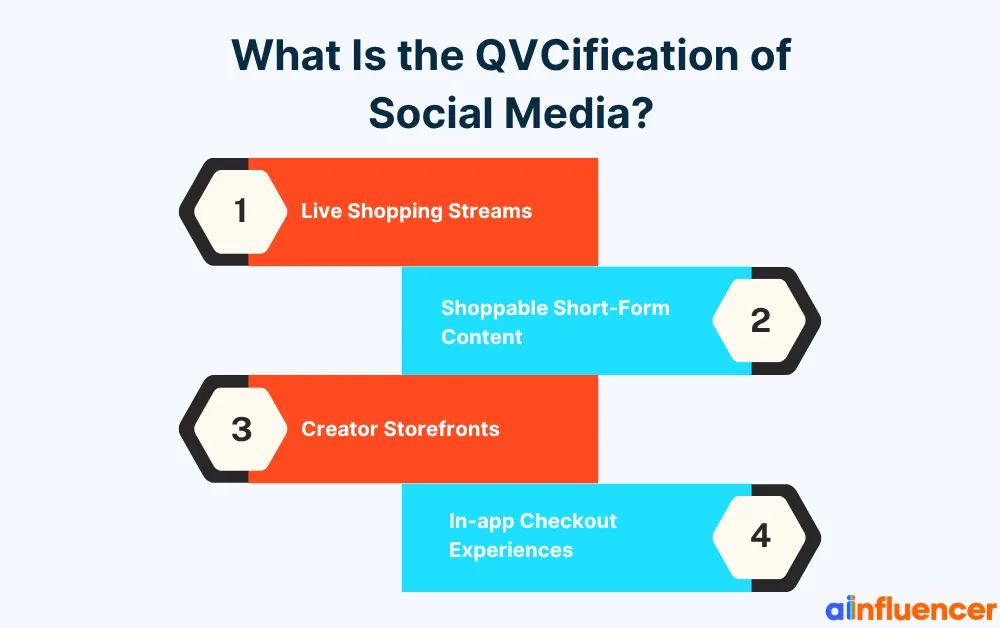
The QVC-ification of social media is the shift from content-focused to commerce-focused media. This model blends the lines between shopping and content-consuming. Some core concepts include:
- Live shopping streams,
- Shoppable short-form content,
- Creator storefronts,
- And in-app checkout experiences.
What Is the QVC-ification of Social Media?
QVC-ification of media is about turning social media platforms into modern shopping channels. The name comes from old TV channels that acted as shops, such as QVC and HSN.
Live shopping streams are often hosted by content creators. These influencers will introduce a product, share flash sales, and connect directly to consumers.
These streams, alongside shoppable short-form content, creator storefronts, and in-app checkout experiences, make the key elements of a QVCified social media.
Let’s take a refresher on how QVC channels worked. A host would introduce a product, demo how to use it, and then offer a flash sale for the next 10, 15, or 30 minutes. Sounds familiar?
This is exactly how live shopping on TikTok and Amazon works. Lives are the core concept of this QVC-ification, but there is more to it.
Main Elements of QVCified Social Media
Here are the main elements of this newly emerging selling system.
1. Live Shopping Streams
The very core of QVC-ification of the online world is live shopping. TikTok was one of the first platforms to bring the QVC form online. Back in 2020, Walmart teamed up with TikTok to sell products.
In this cooperative effort, TikTok influencers acted as hosts. They introduced Walmart products, tried them on or demoed how to use them, and sold them inside the platform. This was one of the events that brought the QVC-ification of social media into the spotlight.

Another successful example of live shopping streams was Haus Cosmetics’ 90-minute livestream. In this stream, the brand gained:
- More than 1000 unique live views,
- Conversion rate of more than 15%,
- And a ROAS (return on ad spend) of 6x.
This process has not slowed down at all. Now you can see signs of this social media commerce all over the internet. Livestreams especially allow for interactive retail.
Let’s say you want to see that dress in blue before buying it, or maybe you want to see a certain detail on the decorative piece you’re buying. With interactive retail on livestreams, you can ask for exactly what you need.
2. Shoppable Short-Form Content
One of the signs of the QVCification of social media is the growth of shoppable short-form content. These days, a lot of the short videos you see are actually ads; they have shopping links or subtly promote a product.
A successful example of short-form content marketing is Willow Boutique on TikTok. Through their shoppable TikToks, this Ohio-based fashion brand achieved:
- 8x return on ad spend,
- 69% additional sales,
- 65% reduction in CPA (cost per acquisition).

According to TikTok Business, “this Shops Ads campaign utilized the video shopping format” and easily reached its objectives.
These days, making and watching short videos is easy, and shopping has quietly slipped into that experience. The more we scroll, the more the line between entertainment and buying blurs. It’s basically the age of the QVC-ification of social media.
3. Creator Storefronts
QVC-ification is all about mixing content with commerce. Storefronts are one of the best examples of that. You can now shop based on what your favorite content creator buys.
Did you see that influencer use a new curling tool in their last video? Well, now you can buy it on their storefront! This further expands the reach of influencers and social media commerce.
Boohoo is an amazing case study of how successful creator storefronts can be. Boohoo implemented influencer storefronts on their e-commerce site.
This allowed creators to showcase collections, and for consumers to get a better idea of the products. According to LoudCrowd, Boohoo had thousands of creator-storefronts. These storefronts had integrations that allowed for tagged content on TikTok and Instagram to auto-flow into them. This led to:
- A run-rate of £15 million in revenue,
- 9x ROI,
- £6.10 CPA per customer,
- £2.55 influencer cost per thousand impressions,
- More than 25000 new customers,
- And approximately £2 million in earned media value.

4. In-app Checkout Experiences
The last step in the process of QVC-fication of social media is checking out. We need to keep the customer’s mindset on content-consuming, even when they’re paying. In-app checkouts allow you to keep customers on the platform.
This will avoid ruining the shopping immersion, allowing the platform to continue consuming content and shopping at the same time. That’s why selling on Instagram and TikTok works so well!
So we’ve learned how the QVC-ification of social media is going, but why does this model work?
Why Does the QVC Model Work?
Trust, authenticity, and emotional involvement are what make the QVC model work. Let’s take a look at each of these elements.
#1 Trust and Authenticity
Viewers don’t think of influencers as celebrities. Instead, influencers feel like friends. Watching a content creator introduce a product feels more like hanging out with a close friend than being advertised to.
This means the modern QVC model can build trust between consumers and brands.
#2 Clear Product Demos
One of the most important aspects of the QVC model is product demos. If you’re introducing a new product or just want to showcase how smoothly your products function, then demos are a great idea. They can show off your product and even get you some brand engagement.
#3 FOMO and Community Experiences
FOMO in marketing refers to the fear of missing out on a product. It’s actually the emotional response. When you’re targeting a community, you’re creating a viral moment.
This FOMO works much better when you’re promoting online. Whether it’s short-form content that’s constantly on people’s explore, or a livestream that’s selling out, you can make use of viewers’ emotional response.
#4 Content Consumption and Shopping Boundaries
As we already mentioned, the QVCification fades out the lines between content consumption and shopping. When you successfully merge the two concepts, you’re adding instant gratification, personalization, and algorithmic push to shopping.
The Benefits of QVC-ification of Social Media for Brands
QVC-ification is a great opportunity for brands to grow and expand their reach. In the words of Gary Vaynerchuck on QVC-ification of social media, putting 5 minutes into this concept can transform your business. Let’s break it down.
Direct Access to Consumers
With online shopping experiences, your brand has direct access to consumers. You can get any message you want out there, with the help of influencers or even on your own.
Real-Time Feedback
You will also get access to real-time feedback from consumers. You can get it from comments on livestreams or comments on short-form content on TikTok or Instagram. In fact, QVC-ification of social media acts as a window to the minds of your consumers.
Cheaper Advertisement
Cost-effective marketing can build or break your brand. While still a big expense, collaborating with influencers is significantly more affordable than traditional marketing. In the QVC model of marketing, your biggest expense is just paying for influencers.
Conclusion
The internet is changing every day, and it’s currently evolving into a more commercial space. As the QVC-ification of social media takes over, content that isn’t meant to sell products will slowly die out.
So make sure to keep your brand up to date, and make use of social media as much as possible. The future of marketing is in shoppable livestreams and reels.
FAQs
This term refers to the internet’s rapid shift into QVC channels. Content is no longer just for the sake of entertainment. It’s now for entertainment and shopping!
Interactive retail is when you can directly interact with products, brands, or the content surrounding them. This can be talking to influencers on livestreams, tagging brands on stories, or commenting on posts.
Your brand can make use of this process by using content as a marketing tool. UGC, influencer-made content, and creator storefronts are great first steps to take.
Most likely yes. The Eastern world, such as China and Japan, has already embraced this model. While the Western world is lagging behind, the future does look very commerce-focused.