If you want to figure out how to sell SEO services to local businesses, you don’t just need good rankings. You need a clear offer, simple language, and a sales process that doesn’t scare off busy owners.
Many strategies can help you sell your SEO services, from using nano-influencers to contact form marketing tools. But the main question is: which one is best for you, and which one should you stay away from?
In this guide, we’ll walk through a practical way to sell SEO that feels like a business conversation, not a lecture about algorithms. Let’s start.
What Is the Importance of Local SEO?
Google and other search engines try to provide users with relevant and high-quality results. When someone searches for “restaurant delivery services,” they are probably looking for a local business rather than one located hundreds of miles away.
Marketing strategies place a lot of emphasis on local search rankings and it is because of the fact that 96% of customers use the internet to research nearby companies. And most of these local searches result in sales.
More than 46% of all Google searches have local intent. A potential lead is likely to visit a competitor if they don’t see you in the search results.
Top 7 Steps on How to Sell Seo Services to Local Businesses
Now, let’s go through all the steps you can take for selling seo services to local businesses. Remember this: you should use these alongside your other marketing activities, like influencer marketing strategies, to get better results.
1. Get in Touch With Them
Your main question is about how to sell SEO services to local businesses, but behind that is another important question: “Where do I find them?”
Getting in touch with customers is where most agencies either build trust fast or lose the deal before it even starts.
When you sell SEO services to local businesses, your first contact should feel like a natural, relevant inquiry, not a random cold pitch.
That is exactly why using website contact formsis one of the most effective ways to start conversations at scale without looking spammy.
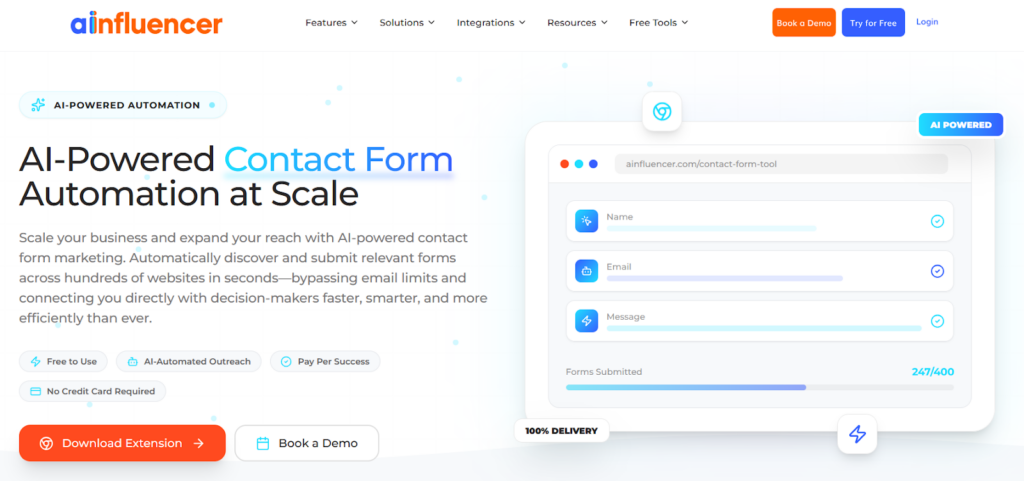
This is where brandID’s Bulk Cold Outreach with AI Contact Us Form Submission enters.
Instead of interrupting business owners with cold calls or DMs, you show up as a genuine prospect who has taken the time to visit their site and reach out through the same channel their real customers use.
With brandID’s tool, you can automate this entire “getting in touch” phase while keeping it highly personalized and targeted.
Benefits of brandID’s Bulk Cold Outreach:
- Much higher reply rates (around 26%) compared to typical cold email or mass DMs (5–9%).
- Your outreach looks like a genuine website inquiry instead of spam, which builds trust with local business owners from the first touch.
- You save hours of manual prospecting and form-filling, freeing you to focus on audits, strategy, and closing deals.
- Faster outreach at scale shortens sales cycles, helping you talk to more decision makers in less time.
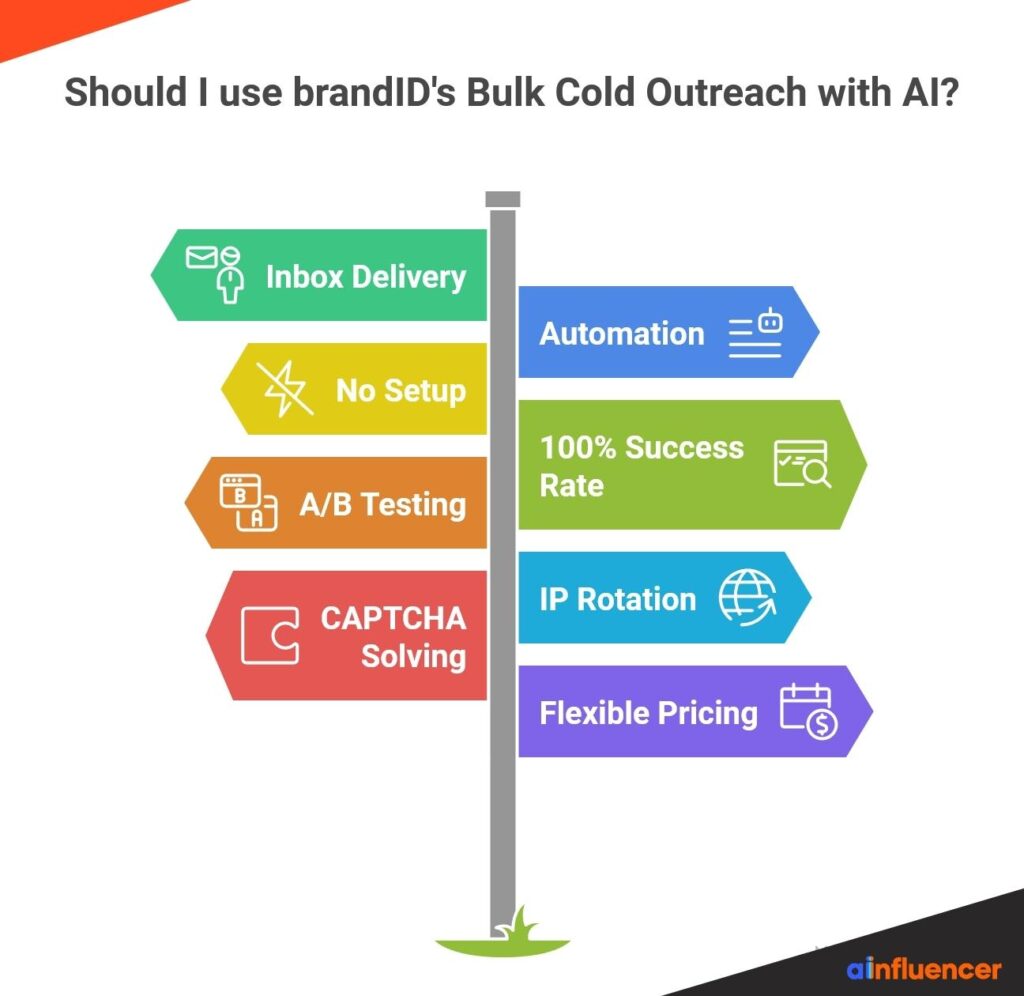
Top features of brandID’s Bulk Cold Outreach with AI:
- Uses each website’s own email server so messages land in the main inbox, not spam.
- Automates finding, filling, and submitting contact forms across thousands of websites per day (10,000–20,000 forms daily).
- No domain setup or email warmup needed before starting outreach.
- Automatically filters and confirms which sites actually have contact forms, giving a 100% success rate on form detection.
- Supports A/B testing of different outreach messages to see which copy performs better.
- Uses different IPs for different websites to avoid being blocked or flagged.
- Includes auto CAPTCHA solving, so the process is not stopped by form protections.
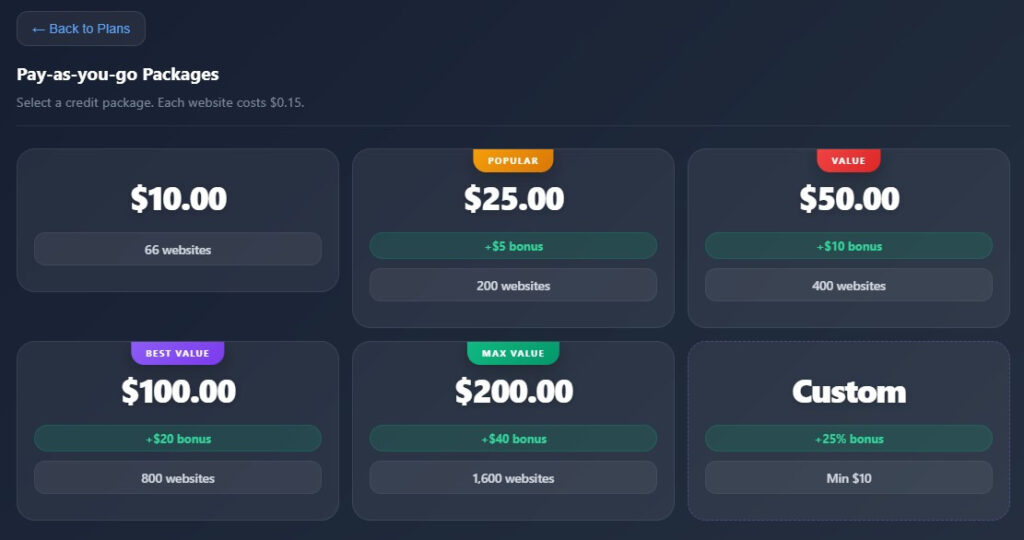
- Offers both subscription and pay‑as‑you‑go pricing models, tailored to how many websites you want to reach.
2. Understand What Local Businesses Actually Care About
Most local business owners don’t think about domain authority. Their only thoughts are about getting more calls, bookings, and foot traffic this month.
When you’re thinking about how to sell SEO services to local businesses, anchor everything to three outcomes:
- More qualified leads. Calls, form fills, and messages are among these.
- More local visibility, like being on Maps, “near me” searches, and local keywords.
- More predictable, recurring revenue for them, and for you
Instead of leading with technical language, translate SEO into outcomes they already understand.
For example, try “I help local businesses turn Google into a reliable source of customers, instead of just relying on word of mouth.” The more you talk in their language and mention customers, revenue, and bookings, the easier selling SEO becomes.
3. Pick a Niche and Look Like a Specialist
Selling SEO services gets dramatically easier when you stop trying to be SEO for everyone and start being SEO for a specific local niche.
Specializing helps you:
- Speak about real-world pain problems.
- Create tailored case studies and templates.
- Charge higher retainers because you look like the go‑to expert.
- Bigger contact circle because of easier process DMing to influencers in your niche.
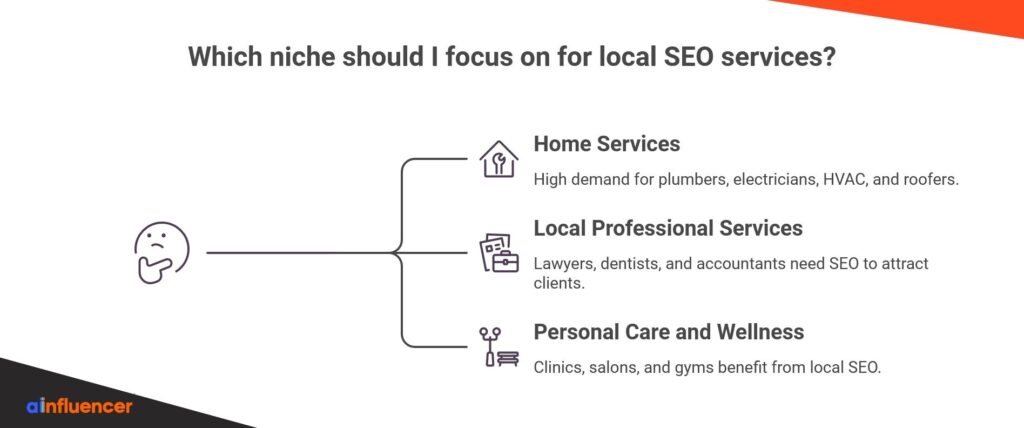
Some of the good niches for local SEO that you can consider are:
- Home services, plumbers, electricians, HVAC, roofers.
- Local professional services, like lawyers, dentists, and accountants.
- Personal care and wellness, for example, clinics, salons, and gyms.
You don’t have to stay in one niche forever, but having a focus makes outreach and sales conversations far easier.
3. Craft an SEO Peach
After you have a firm grasp on the client’s requirements, you must explain SEO as the answer in a way that makes sense to them.
Remove the technicality of your work and take a step back to clarify the concept of SEO. Concentrate on how SEO can increase sales, generate leads, and enhance brand awareness.
Business owners don’t need information about tags, meta descriptions, or other details, such as finding local influencers. They must understand how SEO would affect their financial results.
In your pitch, emphasize how your work for them leads to impressions, clicks, and eventually traffic and trust.
4. Use Case Studies
When you think about how to sell SEO services, case studies can help you a lot.
Even if you don’t have dozens of case studies yet, start collecting simple examples:
- “We helped a local restaurant go from almost invisible on Google to getting an extra 15 calls a month within 6 months.”
- “We rewrote and reorganized their service pages and optimized their profile; now they show up for ‘restaurants near me’ in three nearby towns.”
Turn each client into a short narrative. Include their initial situation. Then focus on what you worked on, and then mention the changes in calls, leads, and bookings.
Local owners don’t need a 20‑page PDF. They need to feel confident that you’ve solved problems like theirs before.
5. Handle Common Objections Professionally
If you’re serious about selling SEO services to local businesses, you’ll hear the same objections again and again. Prepare answers that are honest and calm.
Some typical objections are:
- SEO takes too long: SEO is long‑term, yes, but we usually see early improvements within 3–6 months. And the benefits compound over time, unlike ads that stop the moment you pause them.”
- We tried SEO before; it didn’t work. That’s common. Many providers over‑promise or focus on unreal metrics.
- It’s too expensive: It’s an investment, not a fixed cost. If we can lower your cost per lead versus what you pay in ads or directories, you end up spending less to get a customer.
- We can get it cheaper elsewhere: That’s true — but with SEO, you usually get what you pay for. My focus is on sustainable results and transparent work, so you’re not starting from scratch again in 12 months.”
You don’t need to “win” the argument. You just need to calmly re‑frame SEO as a business investment and invite them to evaluate options based on quality, not only price.
6. Be Honest and Clear
Setting clear expectations is also crucial. SEO is a long-term approach, and it takes time to see benefits.
Be open and honest about which enhancements will pay off right away, like resolving technical problems or improving already-existing content, and which will take more time, like content creation and link building.
Controlling expectations early on helps avoid frustration later on.
For example, let them know that although it takes time to increase traffic and rankings, these efforts pay off in the long run. You’re laying a solid base. As a result, SEO generates more consistent and economical visitors than sponsored advertising.
7. Position Yourself as a Long‑Term Partner
The most profitable way to sell SEO services to local businesses is not to close as many random deals as possible, but to build long‑term relationships with the right clients.
Happy clients become case studies, testimonials, and referral sources. Over time, that makes selling SEO services much easier, because a big part of the sales work is done by your track record.
Conclusion
Learning how to sell SEO services to local businesses is less about annoying people with technical terms and more about becoming the person they trust to bring in steady, profitable customers.
When you speak in their language, show real‑world numbers, and keep your explanations simple, SEO stops sounding like a gamble and starts feeling like a smart business decision.
You can always use new AI tools like branID’s bulk contact form automation to get in touch with as many businesses in a shorter time.
FAQs
Within three to six months, the majority of local SEO activities provide measurable results. Competitive markets, however, might need more time. Optimizing a Google Business Profile might occasionally result in quicker gains.
Try to explain it by connecting search traffic to revenue. Estimate how many people search for their services monthly, how many could realistically click their listing, and how many of those visitors might convert into paying customers. Business owners care about revenue growth, not keyword rankings.
No. You should avoid guaranteeing rankings because search engines ultimately control algorithm outcomes. Instead, guarantee deliverables, transparency, and consistent optimization. Setting realistic expectations builds long-term trust.