Lead generation seems to be much tougher than before, especially for fintech startups. However, following the trends and more modern tactics can make this process much easier than you think. Get ready to learn top fintech lead generation strategies that can help you drive 15–20% better ROI.
With strategies ranging from AI-enhanced targeting to user-friendly tools, like the contact form marketing tool, effective Fintech lead generation is more achievable than ever.
Ready to drive more sales? Let’s see which strategy works better for your business.
The 7 Proven Strategies for FinTech Lead Generation
While some of these lead generation strategies have been around for years, the tactics you used in the past may need updating. Newer strategies combine established methods with AI to be more effective and easier to implement.
So, whether you’re new to FinTech lead generation or have been in this market for several years, you need to update some old rules or mix them with new ones.
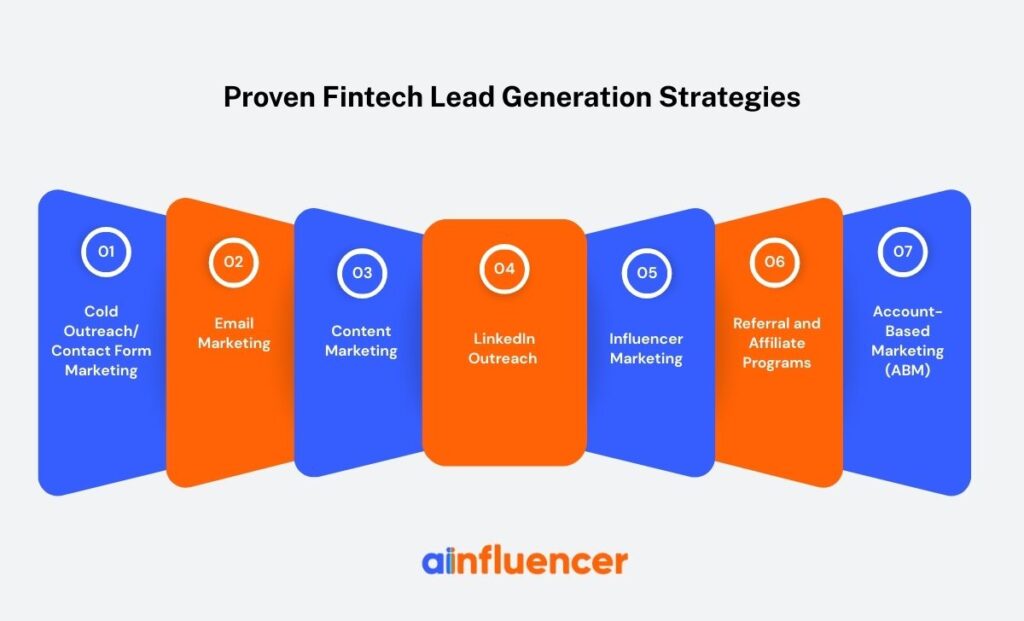
#1 Cold Outreach
Cold outreach is an old tactic that is still alive, especially cold email marketing. It is the sales tactic of contacting potential customers who have no prior relationship with you or your business, either via a cold call or cold email.
Although cold calling seems a bit outdated, cold emailing is still a good FinTech lead generation strategy. However, it has its own pros and cons, including:
Pros
- Proactive lead generation. You can reach new prospects without waiting for inbound traffic.
- Scalable with tools (e.g., AI personalization, automation) for high volume at low cost.
- Direct access to decision-makers when done right (e.g., targeted lists + relevance).
- Builds pipeline quickly in competitive spaces like fintech/SaaS.
Cons
- Low response rates (often 1–5% for emails; higher with multichannel).
- High risk of being ignored, marked as spam, or damaging reputation if generic.
- Strict compliance challenges (GDPR, CAN-SPAM, new deliverability rules).
- Time-intensive personalization is needed to cut through inbox noise.
As you can see, although cold emailing is still a powerful strategy for FinTech companies, it has some drawbacks. That’s why it’s important to do the same process with new methods.
What Is the Best Alternative to Cold Email?
New trends enter the marketing world every year. And now it’s time for contact form marketing.
This trend is changing how marketers approach cold email outreach. Company website contact forms are becoming increasingly valuable as the messages sent via these forms land in an inbox that companies’ decision-makers really check. So, it ensures they receive your email and avoids spam filters and crowded inboxes.
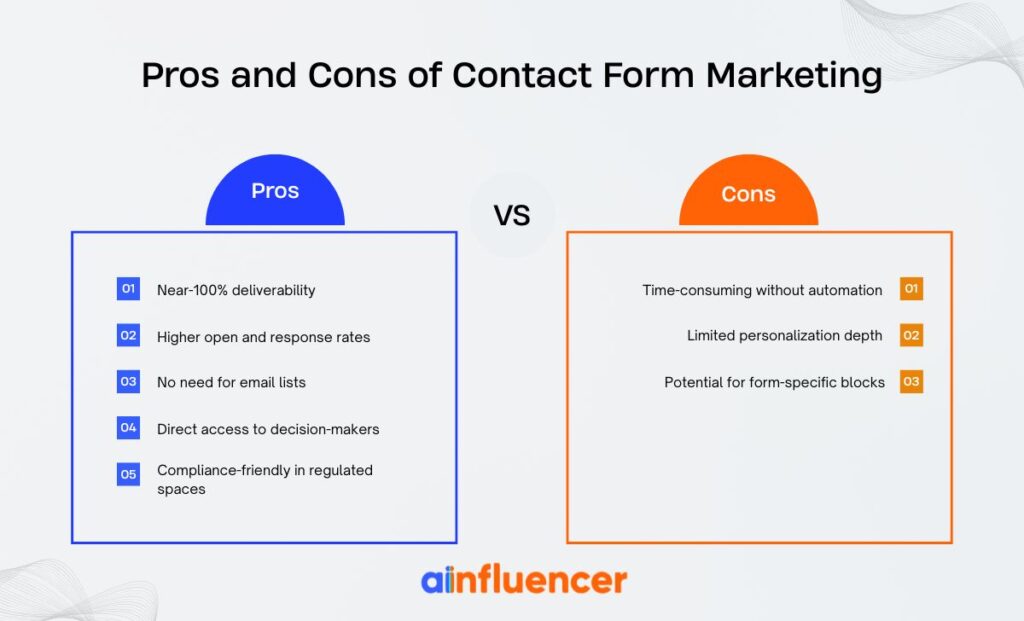
Let’s have a quick look at contact form marketing pros and cons:
Pros
- Near-100% deliverability: Messages go through the site’s own system straight to the recipient’s monitored inbox (often the decision-maker or team), avoiding spam/promotions folders.
- Higher open and response rates: Reports show 5–10x better than cold email (e.g., 20–30% replies in targeted campaigns), since businesses actively check forms.
- No need for email lists: Skip buying or scraping expensive/outdated databases; just target websites directly.
- Direct access to decision-makers: Forms often route to key people (e.g., owners, sales, or execs), increasing visibility and relevance.
- Compliance-friendly in regulated spaces: Lower risk of spam complaints or deliverability blocks compared to mass emailing.
Cons
- Time-consuming without automation: Manual submissions are labor-intensive for large volumes; scaling requires tools or AI-powered services.
- Limited personalization depth: Some forms restrict message length or fields, making it harder to send highly detailed pitches.
- Potential for form-specific blocks: Sites with CAPTCHA, anti-bot measures, or strict policies may reject automated submissions or flag them as spam.
What if you can resolve all these problems with a simple extension?
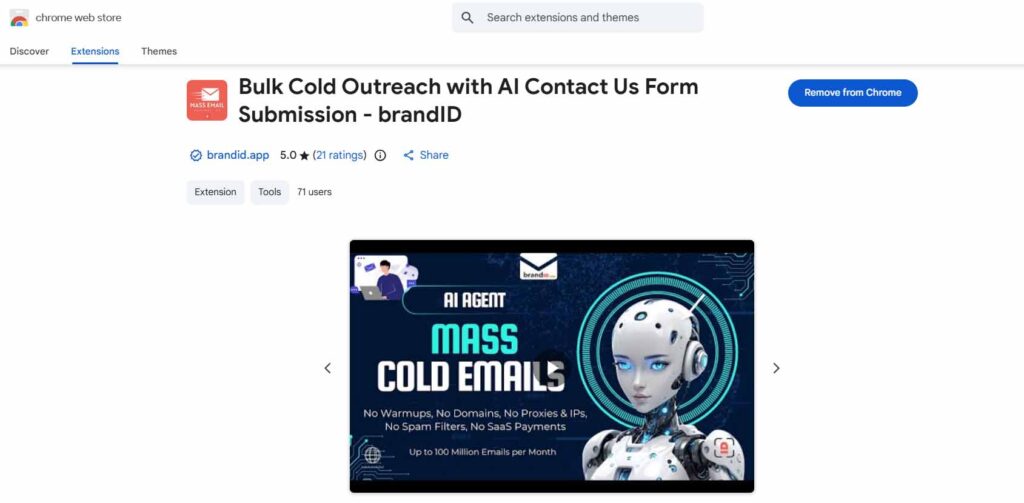
Yes, you definitely can turn contact form marketing into the most effective FinTech lead generation strategy by installing the Bulk Cold Outreach witn AI Chrome Extension designed by brandID.
How Does Bulk Cold Outreach Chrom Extension Help?
That’s simple; the extension automates the process of filling out the contact forms and submitting them. In addition to that, you don’t need to open websites one by one; export a list of your target websites to this extension, and it will check them out to find their contact forms.
The bulk cold outreach Chrome extension then gives you a list of websites that have a valid contact form. You can then start sending your message to them.
That’s not all. Let’s see how it resolves the disadvantages of contact form marketing:
- CAPTCHA resolving: Don’t worry about the CAPTCHA on the websites; this AI lead generation tool resolves all of them without requiring any manual process on your side.
- Automated submission: No need to click on the submit button. When the message is automatically written on each form, this AI tool will submit the form.
- Message personalization and A/B testing: Forget about creating one message for all websites; you can easily personalize the emails based on each recipient group. If you’re not sure which message has a better impact on the recipient, do an A/B test.
- List clearing: If you have a database of websites, you can export to this extension. The extension check out all websites and give you a clear list of the ones that have valid contact form. So, you don’t need to waste your time on websites that don’t work.
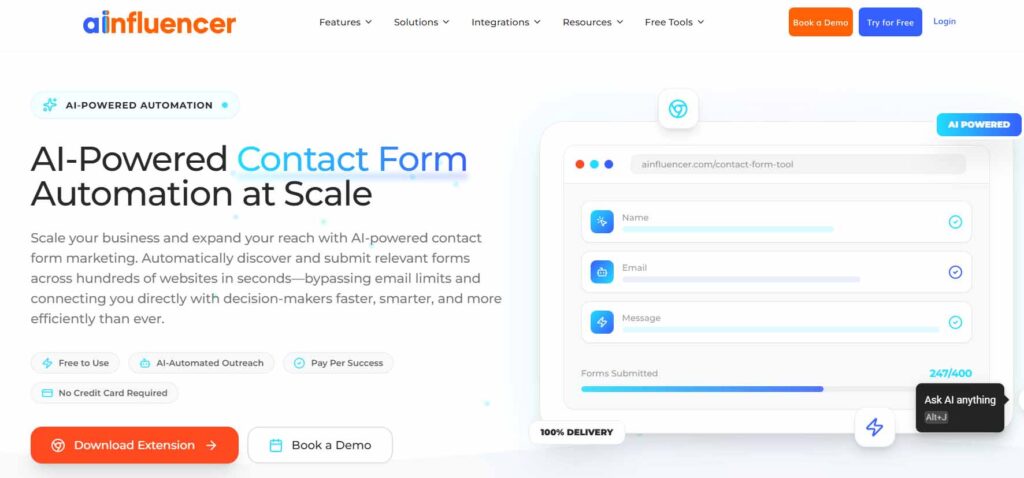
See how you can change the way you do sales outreach with just a simple tool. Read more about the comparison between cold email and contact form marketing.
#2 Email Marketing
In this method, you first collect emails via lead magnets, then nurture subscribers with educational content.
Email marketing involves sending targeted, value-driven messages to prospects and leads to educate, engage, and move them through the funnel.
In fintech, email marketing rarely uses mass “blast” campaigns. Instead, it focuses on personalized, rule-compliant email sequences that speak directly to key concerns, like regulatory risks, integration problems, ROI (return on investment), and security.
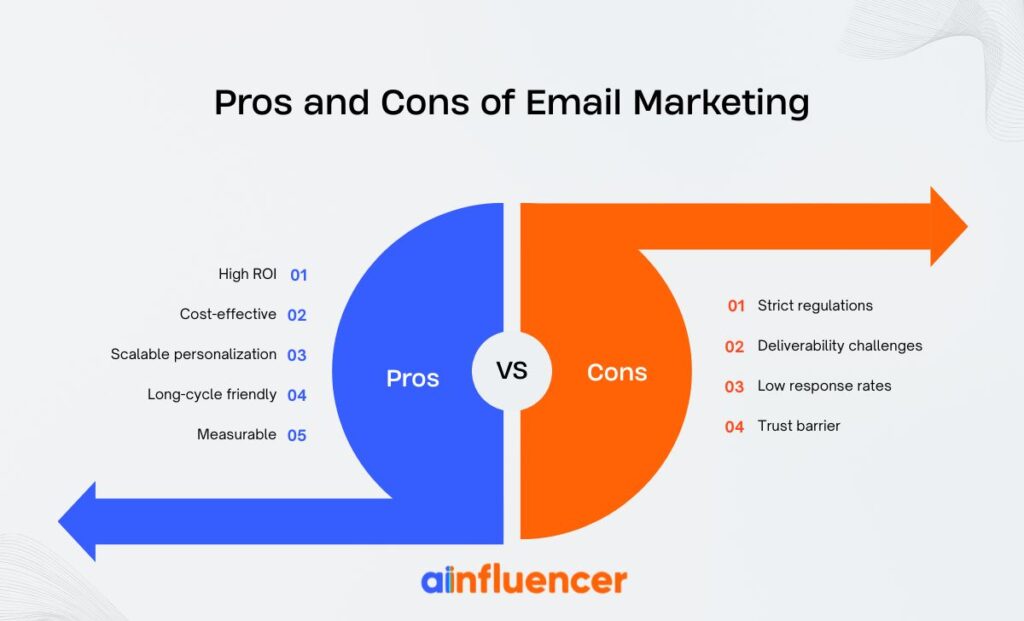
Pros
- High ROI: Still one of the top channels for B2B conversions and nurturing in regulated industries.
- Cost-effective: Low cost per lead compared to paid ads or events.
- Scalable personalization: AI tools simplify the process of personalizing content on a large scale while ensuring compliance.
- Long-cycle friendly: Perfect for educating buyer committees and shortening evaluation time.
- Measurable: You can track opens, clicks, replies, and pipeline impact easily.
Cons
- Strict regulations: GDPR requires explicit consent for the EU; CAN-SPAM (US) mandates opt-out and no deceptive lines; DORA adds EU financial sector scrutiny. Non-compliance risks huge fines.
- Deliverability challenges: Spam filters, inbox competition, and new AI-driven rules make landing in primary inboxes tough.
- Low response rates: Often 1–5% without strong personalization/intent.
- Trust barrier: Fintech prospects are skeptical; generic emails get ignored or damage reputation.
What to Consider?
If you aim to succeed in email marketing today, consider these key topics:
- AI is core, not optional.
- Personalization is deep and predictive.
- Emails are interactive experiences.
- Privacy and consent shape strategy.
- Email works in an omnichannel ecosystem.
- Predictive analytics guide decisions.
- Deliverability depends on engagement.
- Authenticity outweighs automation.
#3 Content Marketing
Content marketing is a smart, low-pressure way to attract and win customers in the fintech world. Instead of pushing sales hard, you create helpful information that people want to read or watch. Why content marketing?
- It builds long-term trust in a skeptical industry.
- Attracts high-quality leads who are already interested.
- Costs less over time than paid ads.
- Works well with long sales cycles (6–12 months are common in fintech).
Best Types of Content for Fintech Lead Generation
Here are simple, effective formats that work great:
- Blog posts and articles.
- In-depth guides and ebooks (free downloads).
- Webinars and video explainers.
- Case studies and success stories.
- Comparisons and tools.
Content marketing isn’t fast magic; it’s about being helpful consistently. Do it right, and it becomes one of your strongest ways to grow leads and sales in fintech.
#4 LinkedIn Outreach
LinkedIn is one of the best places to find and connect with leads in fintech. It’s a professional network full of decision-makers like CFOs, compliance officers, product leaders, and bank executives. They are exactly the people buying fintech solutions (payments, compliance tools, lending software, APIs, etc.).
LinkedIn outreach works well for fintech because buyers are cautious; they need trust, expertise, and relevance before committing.
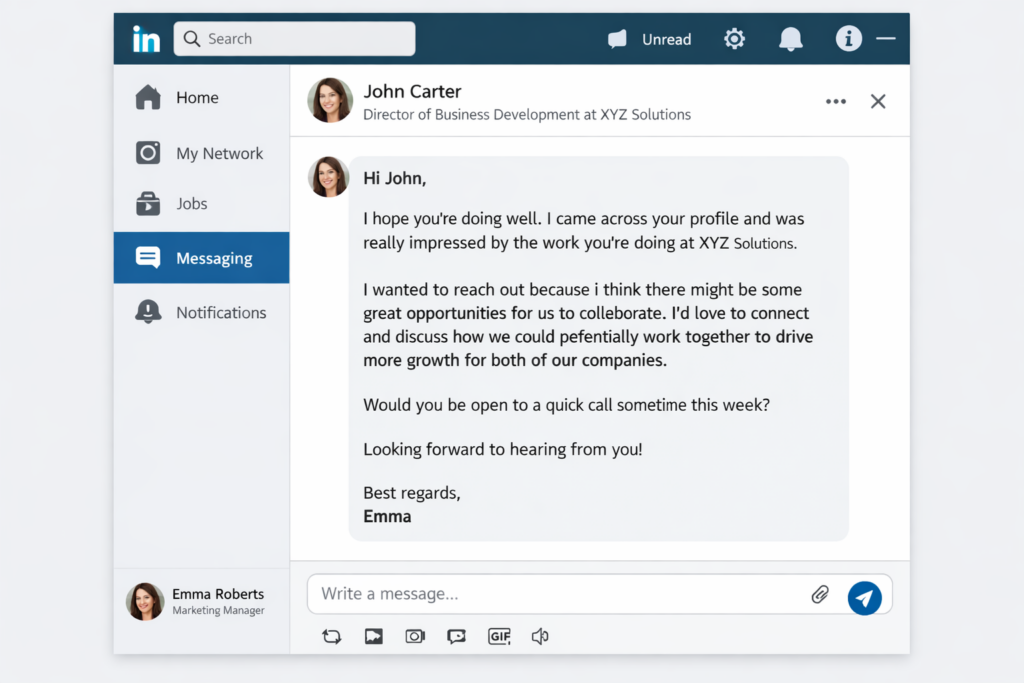
Why LinkedIn Outreach Is Strong for Fintech Lead Generation
- Direct access to buyers: Target by job title, company (e.g., digital banks, payment processors), industry, and even recent activity like funding rounds or regulatory changes.
- Builds trust fast: Sharing insights or commenting on posts shows you understand fintech challenges (regulations, security, integration, ROI).
- Higher reply rates than cold email: Personalized messages on LinkedIn often get 10–25% responses (vs. 1–5% for email), especially with follow-ups.
- Compliant and relationship-focused: Fits fintech’s regulated world—no spam risks if done right.
LinkedIn outreach isn’t about blasting messages; it’s about starting real, helpful conversations in a trust-based industry. Do it consistently and personally, and it becomes a powerful way to fill your fintech pipeline with qualified leads.
#5 Influencer Marketing
In fintech, this is mostly B2B influencer marketing, which means partnering with trusted voices, like experts, thought leaders, or industry pros. These people have an influence on the fintech industry and can help your brand credibly reach the right people.
Why B2B Influencer Marketing Is Effective in Fintech Lead Gens
If you’re uncertain about the effectiveness of this marketing for your lead generation, consider the following benefits of B2B influencer marketing:
- Builds trust fast: Fintech deals involve money, security, and regulations. People trust real experts more than company ads. Influencers explain complex topics simply and show how your solution solves real problems.
- Reaches hard-to-find buyers: Influencers have networks of senior execs who follow them on LinkedIn. A good post or video can spark interest and lead to direct messages or inquiries.
- Drives high-quality leads: Not just views; campaigns often generate warm leads through webinars, case studies, or gated content shared by the influencer. B2B programs report strong ROI, with some seeing qualified leads, pipeline growth, and even closed deals.
- Boosts credibility and awareness: In a skeptical industry, an influencer’s endorsement makes your brand look legitimate.
- Better than traditional ads: Influencer content feels authentic, leading to higher engagement and conversions. Studies show B2B influencer efforts can deliver measurable results like lead gen and revenue attribution.
#6 Referral and Affiliate Programs
Referral and affiliate programs are powerful, low-cost ways to grow leads in fintech. They turn happy customers, partners, or influencers into your sales team by rewarding them for bringing in new users or qualified prospects.
In fintech, these programs work well because trust is everything. People trust recommendations from friends, colleagues, or experts more than ads, especially with money and regulations involved.
#7 Account-Based Marketing (ABM)
ABM focuses on selecting target companies and concentrating efforts on them instead of generating as many leads as possible. In this fintech lead generation strategy, each target account gets personalized campaigns designed for its specific industry or business model.
Quick Benefits of ABM in Fintech
- Better lead quality (warm, ready-to-buy prospects).
- Shorter sales cycles by engaging committees early.
- Higher deal sizes and ROI.
- Stronger trust in a skeptical industry.
- Great with long cycles—nurtures relationships over months.
ABM isn’t cheap or quick to set up. However, for fintech companies selling high-ticket B2B solutions, it’s often the most effective way to fill the pipeline with real opportunities.
Helpful Tools for Lead Generation in Fintech
You don’t need to do lead generation manually. There is a tool for most of these strategies. Let’s check out some of them:
- Cold Email/Contact Form Marketing: Ainfluencer’s contact form marketing tool can help you automate contact form submission, bypass spam filters, increase open rates, and guarantee inbox delivery.
- Influencer Marketing: Ainfluencer’s find influencer tool allows you to search for influencers in your niche, location, or based on their audience.
- AI Message Personalization: Most AI tools, like Copilot, Gemini, and ChatGPT, can help you personalize your messages for your email outreach. You only need to know how to write a professional prompt.
Mistakes to Avoid in Fintech Lead Generation
Here is a concise list of the common pitfalls to avoid in fintech lead generation:
- Ignoring compliance & regulatory risks (GDPR, CAN-SPAM, DORA, etc.)
- Targeting too broadly or using a weak Ideal Customer Profile (ICP)
- Relying on generic, volume-based, or non-personalized tactics
- Neglecting deep personalization and trust-building
- Poor or inconsistent follow-up and nurturing
- Focusing only on top-of-funnel or pure inbound
- Chasing low-quality leads or the wrong metrics
- Allowing sales-marketing misalignment or weak handoffs
Avoid these to build a more effective, compliant, and profitable pipeline.
Conclusion
You may not need to implement all strategies in your Fintech lead generation. Choose the ones that are suitable for your business and budget. Combining two to three methods can be helpful and manageable. For example:
- Startups/low-budget fintech companies can choose contact form marketing, content marketing, and LinkedIn outreach.
- Growth-Stage / Professional Fintech with a moderate budget can opt for email marketing, ABM, and referral programs.
- Enterprise-Focused or High-Budget Fintech can choose a mix of ABM, influencer marketing, and LinkedIn outreach (ads).
FAQs
Fintech involves strict regulations (GDPR, DORA, CCPA), long sales cycles (often 6–18 months), multi-person buyer committees (CFOs, compliance heads, CTOs), and high scrutiny on trust/security. Leads must be high-quality and compliant. That’s why generic volume tactics usually fail. So, strategies that focus on precise targeting, personalized messaging, the use of intent data, and building trust can win.
– Email open rates: 20%–30% (good), 30%+ (strong)
– Reply rates (cold outbound): 2–5% average, 5–10% good, 15–20% top-tier.
– Meeting booking: 1–3% from cold contacts, 20–30% from engaged replies.
– CAC payback: 8–18 months median; top teams hit 5–9 months.
– LTV: CAC ratio: Aim for 3:1 minimum, ideally 5:1+. Track qualified meetings and pipeline value, not just raw leads.
A healthy FinTech lead generation system typically shows:
– High lead quality (not just volume).
– Long-term customer value focus.
– Strong compliance and trust signals.
– Higher costs but higher deal values.
– Predictable pipeline growth.
That mostly depends on the fintech’s stage, deal size, sales cycle length, and internal go‑to‑market capabilities. Most companies benefit from a hybrid approach; they use outsourcing for speed, expertise, and lower fixed costs. They use in-house for precision, ownership, and more control over their lead generation.